Repair or Scrap? How to Work Out If Your Car Is Actually Worth Fixing
A failed WoF, a blown head gasket, or a quote bigger than the car. The break-even formula, real 2026 South Auckland repair cost ranges, and the seven faults that usually end a car — from the people who buy them afterwards.
✍️ By Leo Raines — Scrap Car Buyer Specialist, South Auckland · Published 12 September 2026
Almost every car we collect in South Auckland arrives with the same story attached. Someone got a phone call from a mechanic, the number on the quote was larger than they expected, and they spent a week not knowing what to do about it.
It is a genuinely hard decision, and it is made harder by the fact that nobody in the chain is neutral. A workshop earns money by repairing. We earn money by buying. A dealer earns money by selling you the replacement. You are the only person in the conversation whose interest is simply not wasting money.
So this guide is written against my own commercial interest in places. There are repairs I will tell you to go ahead with, and cars I will tell you not to sell us, because spending $600 to keep a sound vehicle on the road for three more years is obviously better than taking a wrecking offer. What I can offer that a workshop cannot is the other half of the picture: I see what these cars are worth once the decision goes the other way, and I see which repairs people regret.
The short answer
Repair the car if the quote is comfortably under half of what the vehicle is worth once repaired, the rest of the car is sound, and the fault is a one-off rather than the first of a queue. Stop spending if the repair involves structural rust, a failed automatic transmission, a seized or hydrolocked engine, or a dead high-voltage hybrid battery on a car worth under about $6,000 — those four faults end more South Auckland cars than everything else combined. And run the numbers against your real alternative: not the car's book value, but the cash offer you can get for it today. The gap between those two figures is the only number that matters.
The Only Calculation That Actually Decides It
The internet is full of rules of thumb — the "50% rule", the "one year of payments" rule, the "if it costs more than the car is worth" rule. They are all approximations of one honest calculation, which is this:
Break-even test
Repair cost vs (value of the car repaired − cash you'd get for it unrepaired)
If the repair costs more than that gap, you are paying money to make yourself poorer. If it costs less, the repair is buying value — and how much less tells you how good a decision it is.
The reason this works and the popular rules of thumb do not is that it accounts for the money you already have access to. An unrepaired car is not worth zero. It has a floor price — parts demand plus scrap weight — and that floor is money in your hand today, with no risk, no waiting and no second quote from the workshop when they get the head off and find something worse.
Worked example 1 — the repair is clearly worth it
A 2008 Toyota Corolla, 210,000 km, sound body, tidy interior, one fault: the alternator has failed and it needs two new tyres to pass its WoF.
- Repair quote: $980
- Value once repaired, with a fresh WoF, sold privately: $4,500–$5,500
- Cash offer today, unrepaired and not running: $700–$1,100
- The gap: roughly $3,700
Spending $980 to unlock about $3,700 of value is not a close call. Fix it. Even if you intend to sell the car rather than keep it, you are better off doing this repair first — this is exactly the scenario our cash for cars vs private sale comparison is written for.
Worked example 2 — the repair is clearly not worth it
A 2004 Nissan Wingroad, 290,000 km, blown head gasket, rust bubbling along both sills, WoF expired eight months ago.
- Head gasket quote: $2,400, with a warning that the head may need machining
- Rust repair to get through a WoF: $1,200–$2,500, unknown until it is cut open
- Value once repaired: $2,500–$3,500 on a good day
- Cash offer today, as it sits: $400–$650
You would be spending $3,600 to $4,900 to create an asset worth $3,000, giving up a guaranteed $500 to do it. This car is finished, and the correct move is to stop spending and read our complete guide to selling a scrap car in South Auckland.
Worked example 3 — the genuinely difficult one
A 2011 Ford Ranger, 245,000 km, automatic transmission slipping badly, otherwise straight and rust-free with good tyres and a recent cambelt.
- Rebuilt or good used transmission fitted: $3,500–$6,000
- Value once repaired: $11,000–$15,000
- Cash offer today, as it sits: $2,500–$4,500 (utes hold strong value — see our ute and 4WD guide)
- The gap: roughly $8,000
The arithmetic says repair. The judgement call is whether a 245,000 km diesel ute has another expensive failure queued up behind the gearbox — turbo, injectors, DPF, clutch pack. This is where the second question below earns its keep.
Three Questions Before You Spend a Dollar
1. What is the car worth repaired, honestly?
Not what you paid. Not what the same model is listed for by a dealer in Penrose with a warranty and 80,000 fewer kilometres. Look at completed private sales of the same model, same year, similar mileage, and be brutal about condition. Most people overestimate this number by 30–40%, which is precisely the error that leads to over-repairing a car. Our 2026 South Auckland price guide covers how we value the unrepaired side of the equation.
2. What else is about to fail?
This is the question that separates a good decision from a bad one, and almost nobody asks it. A repair quote answers "what is broken today". It says nothing about the next twelve months.
When the car is already on a hoist, ask the mechanic one specific question: "If this were your car, what would you expect to spend on it over the next year, on top of this job?" A good mechanic will give you an honest list — cambelt due, both front struts weeping, CV boots split, water pump seeping, clutch at the end of its life. Add that list to the repair quote before you run the break-even test. Cars rarely fail one part at a time; they fail in cohorts, because everything on them is the same age.
3. What is the cheapest path to the same outcome?
Your goal is not "a repaired car". It is reliable transport. There are usually three or four routes there, and the repair is only one:
- Repair this car — cost is the quote plus the queue behind it.
- Sell it unrepaired and buy a replacement — cost is the price of the replacement minus the cash you get for this one.
- Repair with good used parts instead of new — frequently 40–60% cheaper on an older vehicle, and entirely sensible on a car you will not keep forever.
- Do the safety-critical work only and live with the cosmetic and comfort faults.
Route three deserves more attention than it gets. A used alternator, starter, window regulator, door mirror, headlight assembly or ABS module from a dismantler is a fraction of the new price and, on a 15-year-old car, will often outlast the rest of the vehicle. This is literally what happens to the cars we buy — they become the affordable parts that keep other South Auckland cars on the road, as described in what happens when you sell your car to wreckers.
2026 South Auckland Repair Cost Reality Check
These are indicative ranges we see quoted around South Auckland in 2026 on ordinary passenger vehicles — independent workshops rather than franchise dealers, parts and labour included. European models, utes and anything requiring engine-out access sit at or above the top of each range. Always get your own written quote; this table is for working out whether a number you have been given is normal, high or a sign to get a second opinion.
| Repair | Typical 2026 range | Verdict on a car worth under $5,000 |
|---|---|---|
| Battery, bulbs, wipers, filters | $60–$450 | Always fix |
| Brake pads & discs (per axle) | $350–$900 | Always fix — safety critical |
| Two to four tyres | $300–$1,100 | Fix — required for WoF, and non-negotiable |
| Alternator or starter motor | $450–$1,300 (much less with a used unit) | Usually fix |
| Ball joints, tie rods, bushes | $300–$1,200 | Usually fix |
| Struts / shock absorbers (pair) | $600–$1,600 | Borderline — fix if the rest is sound |
| Cambelt, water pump & tensioner | $700–$1,800 | Fix if you are keeping the car; a snapped belt usually ends the engine |
| Clutch replacement | $1,100–$2,600 | Borderline — run the break-even test |
| Radiator / cooling system overhaul | $600–$1,800 | Borderline, and urgent — overheating destroys engines |
| Catalytic converter | $900–$3,000+ | Usually stop — see the parts-value note below |
| Head gasket (4-cylinder) | $1,500–$3,500 | Usually stop |
| Head gasket (V6 / cracked head / driven hot) | $3,000–$6,000+ | Stop |
| Automatic transmission rebuild or replacement | $2,500–$7,000 | Stop on anything under about $6,000 repaired value |
| Engine replacement (used unit fitted) | $3,000–$8,000 | Stop, unless the model has unusual value |
| Turbo (diesel) | $1,800–$5,000 | Depends entirely on the vehicle — utes often justify it |
| DPF replacement | $2,000–$5,000 | Stop on a high-kilometre car |
| Structural rust repair & certification | $1,200–$6,000+, open-ended | Stop — the hard limit, explained below |
| Airbag / SRS fault diagnosis & repair | $500–$3,500 | Usually stop on an older car — and never ignore it |
| Hybrid high-voltage battery | $2,000–$8,000+ | Depends on model — see the hybrid section |
| Air conditioning overhaul | $500–$2,500 | Comfort only — live without it |
One quiet detail from our side of the fence: a catalytic converter is one of the few components worth real money at end of life, because of the platinum, palladium and rhodium inside it. If you are quoted $2,000 to replace a cat on a car worth $3,000, that car's cat is part of why the cash offer for the whole vehicle is not trivial. Our Auckland scrap metal price guide breaks down which materials in your car actually carry value.
Get a Diagnosis Before You Get a Verdict
A meaningful number of cars we are offered do not need to be scrapped. They need a diagnosis. Every month we take calls that open with "the engine's gone" and turn out to be something cheap wearing a frightening costume.
| What it feels like | What it sometimes actually is |
|---|---|
| "The engine is dead — nothing happens" | Battery, earth strap, starter motor, immobiliser or ignition switch |
| "It's misfiring, the engine is stuffed" | Coil pack, spark plugs, injector, vacuum leak |
| "White smoke — head gasket" | Sometimes, yes. Sometimes a leaking heater hose, an inlet gasket or condensation on a cold morning |
| "The transmission is gone" | Low or burnt fluid, a solenoid, or a speed sensor fault putting it into limp mode |
| "Engine light plus no power" | Boost leak, MAF sensor, clogged EGR, blocked DPF needing a forced regeneration |
| "It overheats, so the engine is cooked" | Thermostat, fan, cap, or an airlock — cheap if you caught it before damage |
A diagnostic hour at an independent South Auckland workshop typically costs $80–$180. On a decision worth thousands, that is the highest-return money you will spend. I would rather you spend it and keep a repairable car than sell us a vehicle that only needed a coil pack — you would find out eventually, and you would be right to be annoyed.
Two caveats. Do not pay for repeated diagnostics on a car that has already failed the break-even test; at that point you are paying to be told what you know. And if a workshop cannot tell you what is wrong after a paid diagnosis, get a second opinion rather than authorising exploratory work charged by the hour.
The Seven Faults That Usually End a South Auckland Car
Ranked by how often they turn up on our collection sheets, with the reasoning behind each.
1. Structural rust
The number one killer of otherwise usable cars in Auckland, and the one people most underestimate. Salt air, 20-plus years, and a design that trapped water somewhere. Surface rust and a bubbled guard are cosmetic and do not fail a Warrant of Fitness. Corrosion in or near a structural area — sills, chassis rails, strut towers, subframe mounts, seatbelt anchorages, suspension mounting points — is a different category entirely. Under the WoF inspection rules, corrosion at or near structural mountings and components is grounds for failure, and once structure has to be cut out and replaced you are into fabrication work that may require specialist certification. It is labour-heavy, open-ended, and on a car worth a few thousand dollars it routinely costs more than the vehicle. When I tell someone to stop spending, this is usually why.
2. Automatic transmission failure
A slipping, shuddering or non-engaging automatic is expensive in every direction: rebuild, replacement unit, or a used box of unknown history. On a car under about $6,000 repaired value it is generally the end. The exception is a well-regarded ute or 4WD with a strong body, where the repaired value is high enough to justify it — as in worked example 3 above.
3. Seized, hydrolocked or rod-knocking engine
A snapped cambelt on an interference engine, oil starvation, a long drive after the temperature gauge went up, or water ingestion through the intake. Once internal damage is done, you are buying an engine and paying to fit it. On anything ordinary and over 200,000 km, the cash offer is the better outcome. Flood-damaged cars have their own specific complications, covered in our guide to cash for damaged, flood and written-off cars.
4. Dead high-voltage hybrid or EV battery
Common now on the many imported hybrids across South Auckland. Sometimes economically repairable — module replacement or a refurbished pack on a well-supported model can be reasonable. Sometimes the replacement pack costs more than the car. It hinges entirely on the model, pack availability and the age of the rest of the vehicle. We deal with this daily and have written it up separately: cash for EVs and hybrids in South Auckland.
5. A long WoF failure sheet on a cheap car
No single item is catastrophic, but there are eleven of them. Two tyres, both front ball joints, a handbrake adjustment, a seeping strut, corroded brake lines, a cracked windscreen and a headlight — and suddenly a $2,500 car needs $2,800 of work. Individually reasonable, collectively terminal.
6. Airbag and SRS faults
Frequently underestimated. Diagnosis can be slow, parts can be model-specific and scarce on imports, and this is not a system to leave broken. On an older, low-value car it is often the item that tips the decision.
7. Accident damage beyond the panel
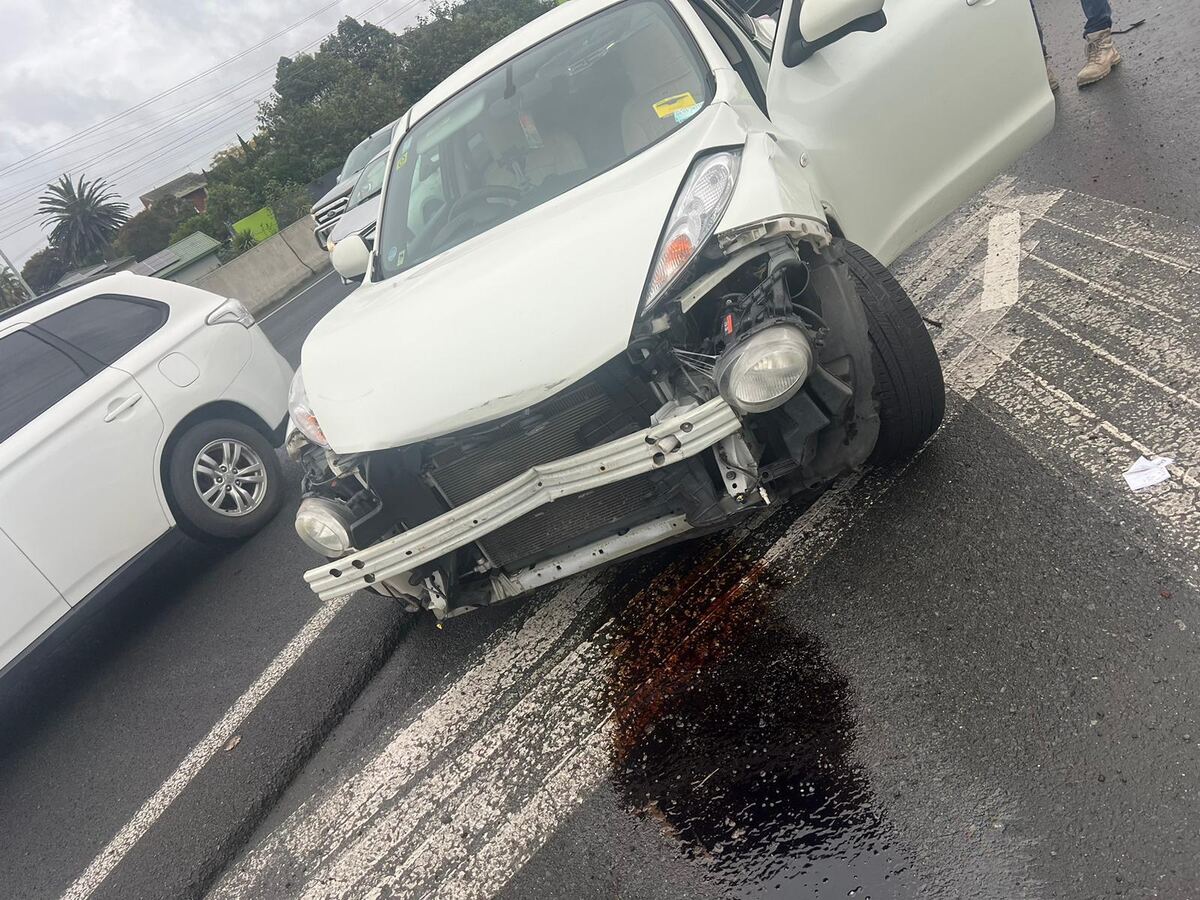
Panels and bumpers are cheap enough. Bent structure, a pushed-back radiator support, misaligned door apertures or a deployed airbag system means the repair is structural rather than cosmetic, and on an older vehicle the cost crosses the vehicle's value almost immediately. If an insurer has already been involved, our explainer on NZ insurance write-off categories covers what repairable versus statutory actually means for your options.
What a Failed WoF Really Tells You
A WoF failure is not a verdict on the car. It is a list, and lists can be priced.
Ask for the written failure sheet — you are entitled to it, and it names each item. Then sort the items into three buckets before you panic or pay:
- Consumables — tyres, wipers, bulbs, brake pads, a light bracket. Cheap, predictable, and worth doing on almost any car.
- Mechanical wear — ball joints, tie rods, bushes, exhaust, handbrake, a leaking strut. Mid-cost, priceable to the dollar, usually worth fixing if the body is sound.
- Structure and safety systems — rust at mounting points, chassis damage, brake lines, airbags, steering components. This is the bucket that ends cars.
If everything on your sheet is in the first two buckets and the total is under a third of the car's repaired value, fix it and drive on. If anything sits in the third bucket, get the repair priced specifically before making any decision — and remember that rust quotes are estimates until the metal is opened up.
Worth knowing about timing: vehicles first registered on or after 1 January 2000 generally need a WoF annually, while older vehicles are on a six-monthly cycle. If you are running a pre-2000 car, you are making this decision twice as often, which changes the maths on borderline repairs. You can also legally sell a vehicle without a current WoF or registration — that is covered in full in our guide to selling a car without WoF or rego in South Auckland.
Does Your Car Have a Parts Premium?
Here is something a workshop has no reason to tell you: two cars with identical faults and identical book values can be worth very different amounts unrepaired, because dismantlers are not buying a car — they are buying demand.
What lifts an unrepaired car's value in South Auckland specifically:
- High population of the same model locally. Toyota, Nissan, Mazda and Honda parts move constantly because there are thousands of those cars within 20 km of our yard. See the 20 cars that pay the most at South Auckland wreckers.
- Utes, 4WDs and vans. Heavier, and their parts are in permanent demand from trades. Details in our ute and 4WD guide.
- A good engine in a car killed by something else. A straight drivetrain in a rusted-out shell still has real value.
- Intact panels, glass, lights and wheels — the parts most in demand after minor accidents.
- Japanese imports with local parts scarcity — sometimes the shell is worth more as parts than as a car. Covered in our Japanese import guide.
And what suppresses it: rare European models with slow-moving parts and expensive specialist labour (see European cash for cars), vehicles already stripped of their catalytic converter or battery, and cars so comprehensively rusted that even the panels are unusable.
The practical point: ask for the unrepaired cash figure before you authorise the repair. It takes one phone call, it is free, and it supplies the one number the break-even test cannot work without. If the figure surprises you on the upside, the repair may no longer make sense. If it is low, the repair just got more attractive. Either way you are deciding with real numbers instead of guesses.
The "One More Repair" Trap
The most expensive pattern I see is not a single bad decision. It is six reasonable ones in a row. It is also becoming more common: the huge block of 2005–2008 imports on New Zealand roads is now at the age cars typically leave the fleet, as our NZ end-of-life vehicle statistics show.
$700 on a starter in March. $1,100 on struts and a WoF in June. $900 on a radiator and hoses in September. $2,300 on a head gasket in December — because after $2,700 already spent, it feels wasteful to give up now.
That instinct is backwards, and it has a name: sunk cost. The money already spent is gone regardless of what you choose next. It is not an investment you can protect by spending more. The only question that has ever mattered is the one at the top of this article: from where I stand today, does this repair cost less than the value it unlocks?
A simple discipline that helps: write down, before you authorise anything, the number at which you will stop. "If this car needs more than $1,500 in the next twelve months, I sell it." Then hold yourself to it. Deciding your limit while calm is much easier than deciding it on the phone to a workshop with no car to get to work in.
The Decision Table
Not a substitute for the arithmetic above, but a fast sanity check once you have a quote in hand.
| Situation | Do this |
|---|---|
| Repair under 25% of repaired value, body sound | Repair. Not a close call. |
| Repair 25–50% of repaired value, nothing else due | Usually repair — especially if you know the car's history. |
| Repair 50–80% of repaired value | Get the cash figure first. Run the break-even test properly. |
| Repair over 80% of repaired value | Sell it. You are buying a car you already own, at close to full price. |
| Repair cost exceeds repaired value | Sell it. No exceptions worth discussing. |
| Structural rust at mounting points | Sell it unless the car is genuinely special to you. |
| Auto transmission gone, car under $6,000 repaired | Sell it. |
| Engine gone, over 200,000 km, ordinary model | Sell it. |
| Long WoF list totalling over a third of the car's value | Price every line item, then decide. Usually sell. |
| You have not had a diagnosis yet | Pay for the diagnosis. Decide nothing until you know what is broken. |
If You Decide to Repair: How Not to Overpay
- Get two written quotes on anything over $800. The spread between South Auckland workshops on the same job is regularly 30–40%.
- Ask for good used or aftermarket parts where it is safe and sensible. On a 15-year-old car, a used alternator, mirror or headlight assembly is sound value. Keep new parts for brakes, belts and safety items.
- Ask for the parts-versus-labour split. A quote that is 80% labour tells you where to negotiate and whether another workshop with the right tooling would be faster.
- Authorise a maximum, in writing. "Proceed up to $1,400; call me before exceeding it." This prevents the exploratory-strip surprise.
- Do the WoF-critical work first, get the WoF, then decide on comfort items separately rather than bundling everything into one intimidating number.
- Do not repair a car you have already decided to sell to a wrecker. It almost never returns the money — a cash offer is based on parts demand and weight, not on whether the car currently runs.
If You Decide to Sell: The Correct Sequence
Once the numbers say stop, the goal is to exit cleanly and get the full amount you are owed. In order:
- Get two or three quotes on the unrepaired car. Tell each buyer exactly what is wrong — an accurate description gets you an accurate offer that will not be revised downward at the kerbside.
- Get the offer in writing before any truck is dispatched, including that removal is free and nothing will be deducted. Our guide on how to verify a South Auckland car buyer covers the checks that take 60 seconds and save hundreds.
- Check for finance. If there is any chance money is still owing, resolve it before the sale — a lender's security interest follows the vehicle. See selling a car with finance still owing.
- Empty the car properly — glovebox, boot, spare wheel well, sun visor, under the seats. Remove toll tags and any aftermarket gear you want to keep.
- Photograph the odometer on the day it leaves. You will need it for a RUC claim if the vehicle is a diesel.
- Take payment before the car is loaded. Non-negotiable, with any buyer.
- File the notice of disposal — a reputable buyer completes this at collection. Our NZTA notice of disposal walkthrough explains why this matters more than any other document.
- Claim your refunds and cancel your insurance. Unused registration and RUC can be claimed back; see how to claim a rego and RUC refund. People routinely leave this money behind.
The Mistakes That Cost the Most
- Repairing without knowing the unrepaired cash value. You cannot run the break-even test without both numbers, and one of them is a free phone call away.
- Overestimating the repaired value. The single most common error, and it always points the same direction: toward over-spending.
- Ignoring the queue. Fixing today's fault on a car with four more due inside a year.
- Letting sunk cost decide. The $2,700 you already spent is not a reason to spend $2,300 more.
- Scrapping on a guess. Selling a repairable car because nobody actually diagnosed it. $120 would have answered the question.
- Repairing purely to sell to a wrecker. Money in, no money back out.
- Letting the car sit for eight months while you decide. Flat battery, seized brakes, rust accelerating, tyres flat-spotting, and the offer drops the whole time. Indecision is itself a cost.
- Taking the highest phone quote. The number that wins the booking is not always the number that gets paid. Get it in writing.
Where We Stand
We buy cars in any condition across every South Auckland suburb — running or not, WoF or no WoF, failed, flooded, rusted or written off. That is our business, and we are good at it.
But the version of this business that works long-term is the one where people trust the advice. So if you call us with a $900 repair on a sound car worth $5,000, we will tell you to fix it and call us in three years. If you call us with a blown head gasket and rusted sills, we will give you a firm figure, confirm it in writing, collect the car for free, pay you before it is loaded, and complete the NZTA disposal paperwork on the spot.
Either way, the phone call is free and the figure is yours to use however you like — including as the missing number in a decision you make with a workshop instead of with us.
Get the Number You Need to Decide
Call 0800 705 243 or get a quote online. Tell us the make, model, year, approximate kilometres and what is wrong with it, and we will give you a firm cash figure for the car as it sits — no obligation, no truck sent, no pressure. Then run the break-even test with real numbers on both sides.
Repair or Scrap — Common Questions
When is a car not worth repairing?
As a working rule: when the repair quote exceeds roughly half of what the car would be worth once repaired, or when the repair costs more than the repaired value minus the cash offer you can get for it unrepaired. Four faults end cars almost regardless of the arithmetic — structural rust, a failed automatic transmission, a seized or internally damaged engine, and a dead high-voltage hybrid battery on a low-value vehicle.
Is it worth fixing a car that failed its WoF?
It depends entirely on which items failed. Tyres, bulbs, wipers, brake pads and a worn ball joint are cheap and worth fixing on almost any car. Structural rust, chassis damage, brake lines, steering and suspension mounting corrosion and airbag faults are the expensive category, and on a car worth a few thousand dollars they frequently cost more than the vehicle. Get the written failure sheet and price each line item before you decide.
How much does a head gasket cost to fix in Auckland?
In 2026 a head gasket on a common four-cylinder car typically runs about $1,500–$3,500 once machining, head bolts, timing components and coolant work are included. On a V6, or where the head is cracked or the engine was driven hot, it can exceed $4,000. Because that is more than many 15-to-20-year-old cars are worth, a blown head gasket is one of the most common reasons people sell for cash instead.
Should I repair my car before selling it for cash?
Almost never. A cash-for-cars offer is based on parts demand, desirability and weight — not on whether the car currently starts or holds a WoF. Spending $1,200 on a repair rarely lifts a wrecking offer by $1,200, so you usually lose money on the exchange. The exception is a cheap repair on a sound car you intend to sell privately as a going vehicle.
Does rust mean my car is finished?
Not automatically. Surface rust and small cosmetic patches do not fail a WoF. The problem is corrosion in or near structural areas — sills, chassis rails, strut towers, subframe and seatbelt mounting points. That work is labour-intensive, can require certification once structure is cut and replaced, and the final cost is not known until the metal is opened up. On an older car it regularly exceeds the vehicle's market value.
My mechanic says the transmission is gone. Is that always the end?
No, but usually on a cheaper car. Get a diagnosis first — burnt or low fluid, a solenoid, or a speed sensor putting the car into limp mode can imitate a failed gearbox. If the unit genuinely has failed, a rebuild or replacement typically runs $2,500–$7,000, which ends most cars under about $6,000 repaired value. Utes, 4WDs and vans with sound bodies are the common exception because their repaired value is high enough to carry the cost.
Can I sell a car that is not worth repairing in South Auckland?
Yes. We buy vehicles in any condition across all 60-plus South Auckland suburbs — running or not, with or without WoF or registration, including cars that have just failed a WoF or need an engine or gearbox. Removal is free and usually same-day, payment is made before the vehicle is loaded, and we complete the NZTA notice of disposal at collection.
How long should I wait before deciding?
Not long. A car sitting undriven deteriorates — flat battery, seizing brakes, flat-spotted tyres, accelerating rust — and the cash offer falls with it. Get the diagnosis, get the repair quote, get the unrepaired cash figure, then decide inside a week or two. Indecision has a real price, and it is paid in the final offer.
Related Guides
Cash For Cars South Auckland Price Guide 2026 — What Your Car Is Actually Worth
Read GuideSelling a Car Without WoF or Rego in South Auckland — Your Legal Guide
Read GuideThe Complete Guide to Selling Your Scrap Car in South Auckland (2026)
Read GuideReady for Top Cash in South Auckland?
Free same-day removal across every South Auckland suburb. Top cash on the spot — running or not, any condition, any make.