The Complete Guide to Selling Your Scrap Car in South Auckland (2026)
Everything South Auckland residents need to know about selling a scrap, junk, or end-of-life vehicle — NZ legal requirements, real 2026 pricing, NZTA paperwork, environmental rules, scam red flags, and a step-by-step process to get top cash today.
✍️ By Leo Raines — Scrap Car Buyer Specialist, South Auckland
Got a scrap car sitting in your driveway in Manukau, Papakura, or Mangere? You're not alone. Thousands of South Auckland households have a vehicle that's reached the end of its road life — whether from mechanical failure, accident damage, a lapsed WoF, or simple old age. The good news: that car is still worth real cash, and selling it is far simpler than most people think.
This is the most comprehensive guide available for South Auckland residents who want to sell a scrap car in 2026. It covers the legal requirements specific to New Zealand, real pricing data broken down by vehicle type and condition, the exact paperwork you need, environmental obligations, how to avoid common scams, and a clear step-by-step process.
1. What Actually Counts as a "Scrap" Car in New Zealand
There's no single legal definition of a "scrap car" in New Zealand law. In practice, a vehicle is considered scrap when putting it back on the road would cost more than the vehicle is worth. This typically includes:
- Non-running vehicles — engine failure, blown head gasket, seized motor, dead transmission
- Written-off vehicles — insurance companies have declared the repair cost exceeds the vehicle's value
- Accident-damaged vehicles — structural damage that makes repair uneconomical
- End-of-life vehicles — excessive rust, multiple mechanical failures, high-mileage wear
- Vehicles with lapsed WoF/rego — where the cost of repairs to pass a new Warrant of Fitness exceeds the car's value
- Flood-damaged vehicles — water damage to electronics and interior that's uneconomical to repair
Key point: A scrap car is not worthless. Even a completely non-running vehicle contains hundreds of kilograms of recyclable steel and aluminium, plus individual parts that have independent resale value. Understanding this is how you avoid being underpaid.
2. NZ Legal Requirements for Selling a Scrap Car
New Zealand has specific laws governing vehicle disposal that protect both sellers and the environment. Here's what you need to know as a South Auckland resident:
Ownership and the Right to Sell
You can only sell a vehicle you legally own. In New Zealand, this means:
- You are the registered person on the NZTA Motor Vehicle Register
- There is no security interest registered against the vehicle on the Personal Property Securities Register (PPSR)
- The vehicle is not subject to a court order, Police hold, or customs seizure
Before selling, check your vehicle's PPSR status. If there's outstanding finance, you must clear it before the sale — or arrange with the finance company to settle from the sale proceeds. See our full PPSR and finance-owing guide for the exact order of operations.
Written-Off Vehicles — The Two Categories
If your car has been written off by an insurer, there are two categories that matter:
- Statutory write-off (Category S) — severe structural damage. Cannot be re-registered for road use. Can only be sold for parts or scrap metal.
- Repairable write-off — damage is repairable. Can be sold, fixed, and re-registered after passing a VTNZ or VINZ inspection.
The write-off status must be disclosed to any buyer. Reputable car wreckers will check this before purchasing.
WoF and Registration — Not Required to Sell
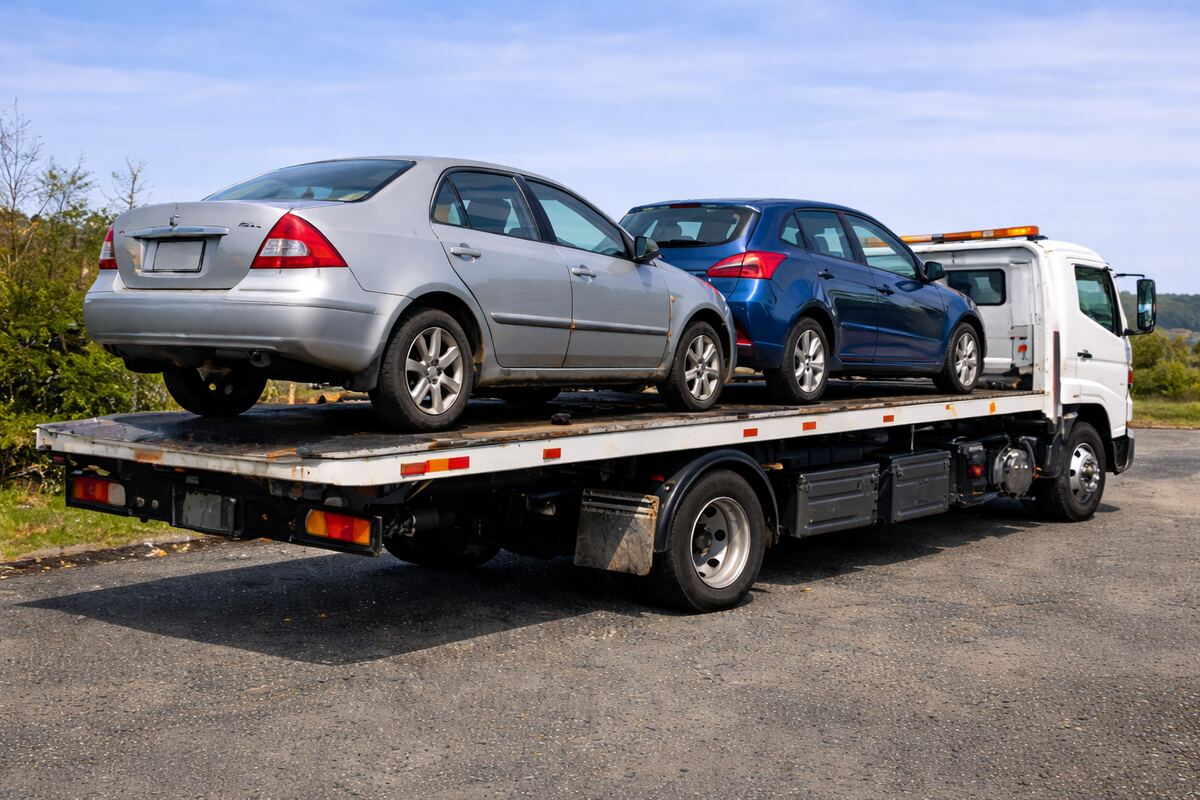
You do not need a current Warrant of Fitness or vehicle registration to sell a scrap car. However, the vehicle cannot be driven on public roads without both a current WoF and rego. It must be towed or transported on a flatbed. Any reputable scrap car removal company will handle this for you at no charge.
Auckland Council Environmental Rules
Under Auckland Council's bylaw framework, vehicles stored on residential property must not leak hazardous fluids into the ground. If your scrap car is leaking oil, coolant, or battery acid, you could face a compliance notice. This is another good reason to sell sooner rather than later — see Section 9 for full details.
3. NZTA Paperwork — Exactly What's Required
The paperwork for selling a scrap car in New Zealand is simpler than most people expect. Here's the complete list:
What You Need to Provide
- Photo ID — current NZ driver licence or passport
- Vehicle plate number — or the physical plates themselves
- Registration certificate — if you have it (not strictly required, but makes the process smoother)
What the Buyer Handles
A licensed buyer (wrecker or cash-for-cars company) will handle:
- MR13A form — "Change of Registered Person" notification to NZTA. This transfers the vehicle out of your name. The buyer must file this within 7 days of the sale.
- Notice of Disposal — if the vehicle will be destroyed/scrapped rather than resold
- Plate surrender — returning plates to NZTA if the vehicle is being permanently removed from the register
Protect Yourself
Always get written confirmation that the buyer will notify NZTA of the change of ownership. Until NZTA is notified, you remain the registered person — meaning you're liable for any fines, tolls, or incidents involving the vehicle. A written receipt showing the date of sale, buyer's details, and vehicle particulars is your protection.
Pro tip for South Auckland sellers:
Ask the buyer for a copy of the completed MR13A form or a confirmation number. Follow up with NZTA after 7 days to verify the ownership transfer went through. You can check your vehicle's registered person status on the NZTA website using the plate number.
4. Real Scrap Car Prices in South Auckland — 2026 Data
Scrap car prices fluctuate based on global steel and aluminium markets, local demand for second-hand parts, and seasonal factors. Here are the real price ranges South Auckland wreckers and cash-for-cars companies are paying in 2026:
By Vehicle Type and Condition
| Vehicle Type | Non-Running / Shell | Complete, Non-Running | Running / Driveable |
|---|---|---|---|
| Small car (Yaris, Swift, Demio) | $200–$400 | $400–$800 | $800–$2,500 |
| Medium sedan (Corolla, Civic, Mazda3) | $300–$600 | $600–$1,200 | $1,200–$4,000 |
| Large sedan (Camry, Accord, Legacy) | $400–$800 | $800–$1,500 | $1,500–$5,000 |
| SUV / crossover (RAV4, CRV, X-Trail) | $500–$1,000 | $1,000–$2,500 | $2,500–$6,000 |
| 4WD (Hilux, Prado, Pajero, Patrol) | $700–$1,500 | $1,500–$3,500 | $3,500–$8,000+ |
| Ute (Hilux, Ranger, Navara, BT-50) | $800–$2,000 | $2,000–$4,000 | $4,000–$8,000+ |
| Van (Hiace, E-series, Previa) | $500–$1,200 | $1,200–$2,500 | $2,500–$6,000 |
| European (BMW, Mercedes, Audi, VW) | $400–$1,200 | $1,200–$2,500 | $2,500–$7,000 |
| Light truck (Dyna, Canter, Elf) | $800–$2,000 | $2,000–$4,000 | $4,000–$10,000+ |
Prices are indicative ranges based on South Auckland market conditions as of May 2026. Actual offers depend on individual vehicle condition, completeness, and current market demand. Call 0800 705 243 for an accurate quote on your specific vehicle.
Scrap Metal Prices — The Baseline
The absolute floor value of any scrap car is its metal weight. In mid-2026, South Auckland scrap metal prices are approximately:
- Scrap steel — $180–$250 per tonne
- Scrap aluminium — $1,800–$2,400 per tonne
- Catalytic converter precious metals — varies widely, $80–$600+ per unit depending on type
A typical car weighs 1,000–1,800 kg, of which about 65% is steel and 8–10% is aluminium. This means the bare metal in an average sedan is worth roughly $200–$500 even with zero resaleable parts. The scrap car value guide has more detail on metal pricing.
5. The 8 Factors That Drive Your Scrap Car's Price
Understanding what buyers look at helps you negotiate better. Here's what matters most, ranked by impact:
- Completeness — this is the single biggest factor. A complete car (all panels, engine, gearbox, interior intact) is worth significantly more than a stripped shell. Buyers can extract dozens of resaleable parts from a complete vehicle.
- Make and model popularity — Japanese imports like Toyota, Honda, Nissan, and Mazda fetch premium scrap prices because their parts are in constant demand across New Zealand. See the top-paying cars list for specifics.
- Vehicle type — utes and 4WDs consistently pay more than sedans because their parts (diesel engines, transfer cases, tray bodies) have higher individual resale value.
- Running condition — a running vehicle is worth 2–3x a non-running equivalent. If your car starts and drives, it has parts value AND potential resale value.
- Weight — heavier vehicles contain more recyclable metal. A Hilux or Patrol yields more scrap steel than a Vitz.
- Damage type — mechanical failure is better than structural damage. A blown engine still has a gearbox, diff, and body panels worth selling. A badly damaged chassis reduces everything else's value.
- Market timing — steel prices fluctuate with global markets. Parts demand is seasonal (4WD parts spike in winter). The 2026 price guide tracks current trends.
- Location within South Auckland — not all suburbs cost the same to service. Remote Franklin locations may see slightly lower offers to account for transport time, while central Manukau or Otahuhu locations are easiest to service.
6. Step-by-Step: How to Sell Your Scrap Car in South Auckland
Here's the exact process from start to cash in hand:
Step 1: Gather Your Vehicle Information
Before contacting any buyer, have these details ready:
- Make, model, and year (e.g., 2005 Toyota Corolla)
- Registration plate number
- Odometer reading (approximate is fine)
- General condition — does it start? Does it drive? Major damage?
- Location — which South Auckland suburb for pickup
Step 2: Get Multiple Quotes
Contact at least 2–3 buyers to compare offers. A genuine buyer will give you a firm quote over the phone based on your vehicle details — no vague "we'll see when we get there" responses. Call 0800 705 243 for an instant, no-obligation quote.
Step 3: Confirm the Terms
Before accepting, confirm:
- The exact cash amount — is the quote firm, or subject to inspection?
- Towing is included — free removal should be standard
- The buyer will handle all NZTA paperwork
- Payment method — cash on the spot or bank transfer
- Timeline — same-day pickup is standard for most South Auckland suburbs
Step 4: Prepare for Pickup
- Remove all personal belongings from the vehicle (check glovebox, boot, under seats, door pockets)
- Remove any aftermarket accessories you want to keep (dash cam, Bluetooth adapter, phone holder)
- Ensure the vehicle is accessible — clear driveway access, not blocked in by other vehicles
- Have your photo ID ready
Step 5: Complete the Sale
At pickup, the buyer will:
- Inspect the vehicle and confirm the quoted price
- Ask you to sign a sale/transfer document
- Pay you — cash in hand or bank transfer
- Load the vehicle onto their tow truck or flatbed
- Provide you with a receipt
Step 6: Follow Up
After the sale:
- Keep your receipt in a safe place
- Check with NZTA after 7 days that the ownership transfer has been processed
- Cancel any insurance policy on the vehicle
- If you had a Road User Charges (RUC) licence for a diesel vehicle, contact NZTA about any unused portion
7. How to Maximise Your Scrap Car Payout
Smart sellers can get significantly more cash by following these strategies:
Do:
- Keep it complete — resist the temptation to strip parts. A complete car almost always pays more than a stripped shell plus individually sold parts. Buyers pay a completeness premium.
- Sell sooner rather than later — cars lose value as they deteriorate. Rust spreads, batteries die, fluids leak. A car that's worth $800 today might only be worth $500 in six months.
- Be honest about condition — if you overstate the condition, the buyer will lower their offer at pickup. Accurate descriptions lead to firm quotes that stick.
- Get multiple quotes — prices vary between buyers. Even a 10-minute effort calling three companies can net you an extra $100–$300.
- Know your car's strengths — if your car is a popular model (Hilux, Corolla, Civic) or has a desirable feature (turbo diesel, low-km gearbox), mention it. Buyers will pay more for in-demand parts.
- Mention all vehicles — if you have multiple scrap cars, sell them together. Buyers often pay more per vehicle for multi-car pickups because it's more efficient.
Don't:
- Don't strip parts yourself — unless you have specific mechanical knowledge and a ready buyer for each part, you'll reduce the overall value. The exception is aftermarket accessories (alloy wheels, stereo, bull bar).
- Don't accept the first offer without checking others — loyalty is nice, but your wallet will thank you for comparing.
- Don't pay for towing — free pickup is industry standard in South Auckland. If someone charges for towing, walk away.
- Don't leave it until the vehicle is unsalvageable — a car that's been sitting in a paddock for 3 years with broken windows and a rusted-through floor is worth far less than one that was parked under cover last month.
8. Scrap Car Buying Scams — Red Flags Every South Aucklander Should Know
Most cash-for-cars operators in South Auckland are legitimate businesses, but scams do exist. Protect yourself by watching for these red flags:
The "Bait and Switch" Quote
The buyer offers an attractive price over the phone, then arrives and claims the car is worse than described, dropping the price by 30–50%. Protection: Get the quote in writing (text or email) and be accurate about your vehicle's condition. If the buyer drops the price at pickup without a legitimate reason (undisclosed major damage), send them away and call the next buyer.
The "You Pay for Towing" Trick
The buyer deducts $100–$200 for "towing costs" from your agreed price. Protection: Confirm upfront that the quoted price includes free removal. This is standard practice — anyone charging for towing is either inexperienced or dishonest.
The Cheque Payment
The buyer pays by cheque instead of cash or bank transfer. The cheque bounces days later. Protection: Insist on cash or a confirmed bank transfer before releasing the vehicle. Never accept a personal cheque from someone you don't know.
No Receipt, No Paperwork
The buyer takes the car but doesn't provide a receipt and never notifies NZTA. You remain the registered owner and are liable for any fines or incidents. Protection: Demand a written receipt at the time of sale. Verify NZTA notification after 7 days.
The "Cash Now, Car Later" Scam
Someone offers to buy your car but asks to collect it later, paying a small deposit now. They never return for the car, or they dispute the sale. Protection: Only do the transaction when the car leaves your property. Cash and car should exchange at the same time.
Unlicensed Operators
In New Zealand, motor vehicle traders must be registered with the Motor Vehicle Traders Register. Unlicensed operators may not follow proper environmental disposal procedures, leaving you potentially liable. Protection: Ask for the buyer's trader registration number and verify it.
Go deeper: we've written a dedicated resource on this — Is cash for cars legit? How to verify a South Auckland car buyer — covering the free register searches, all 11 red flags, the PPSR finance check, and what to do if you've already been short-changed.
9. Environmental Rules for Scrap Cars in Auckland
Scrapping a car involves hazardous materials that are regulated under both national law (Resource Management Act) and Auckland Council bylaws. Here's what matters to you as a seller:
Hazardous Materials in Every Car
A typical end-of-life vehicle contains:
- Engine oil — 3–6 litres, classified as a hazardous substance
- Coolant/antifreeze — 5–10 litres, toxic to animals and waterways
- Brake fluid — 0.5–1 litre, corrosive
- Power steering fluid — 0.5–1 litre
- Air conditioning refrigerant — must be recovered by a licensed technician, not vented
- Lead-acid battery — contains lead and sulphuric acid
- Fuel — remaining petrol or diesel
- Airbag propellants — explosive if mishandled
- Mercury switches — in older vehicles
Your Obligations as the Seller
While the seller isn't responsible for recycling the vehicle, you are responsible for:
- Not dumping the vehicle on public land (illegal under the Litter Act and can result in fines up to $7,500 for individuals)
- Not storing a leaking vehicle where fluids can contaminate soil or waterways
- Selling only to a licensed operator who will dispose of the vehicle properly
How Reputable Wreckers Handle It
Licensed auto recyclers in South Auckland follow a regulated depollution process:
- Fluid drain — all fluids are captured and either recycled or disposed of through licensed waste contractors
- Battery removal — lead-acid batteries are recycled through authorised battery recyclers
- Refrigerant recovery — air conditioning gas is recovered, not vented
- Parts removal — reusable parts are tested, cleaned, and catalogued for resale
- Shell crushing — the remaining body is crushed and sent to a steel recycler
- Shredding and separation — steel, aluminium, copper, and other metals are separated for recycling
About 80–85% of a modern car by weight is recycled. The remaining 15–20% (plastics, rubber, glass, foam) goes to landfill, though this percentage is decreasing as recycling technology improves. See our behind-the-scenes guide for the full process.
10. Should You Repair or Scrap? A Decision Framework
This is the question every owner of an ageing vehicle faces. Here's a practical framework:
Scrap It If:
- Repair cost exceeds vehicle value — if a mechanic quotes $3,000 to fix a car worth $2,000, it's scrap. Get the repair quote in writing to compare.
- Multiple major systems failing — engine, transmission, and suspension all need work. One major repair can be justified; three rarely can.
- Structural rust — chassis or subframe corrosion is effectively irreparable on a standard car. Once the structure is compromised, it's over.
- Failed WoF with major items — if a WoF inspection reveals structural defects, brake system failure, or chassis corrosion, the cost to fix almost always exceeds the car's value.
- You need money now — sometimes the most practical choice is to convert an unused asset into cash today.
Consider Repairing If:
- Single mechanical issue — one fix (timing belt, clutch, alternator) on an otherwise sound car can be worthwhile
- Popular model with high resale — a Hilux or Corolla with one mechanical issue might be worth fixing because the repaired vehicle has strong resale value
- Sentimental value — sometimes a car is worth more to you than the market says. That's a valid reason to repair.
- Low-km engine/gearbox — if the mechanical components are sound but the body is damaged, a private sale to someone who needs those parts might yield more than scrapping
The Quick Math
Use this formula: If repair cost > 60% of vehicle's post-repair value, scrap it. The 60% threshold (not 100%) accounts for the risk that additional problems emerge after the initial repair, and the fact that a repaired car still has lower resale value than a never-damaged equivalent.
11. South Auckland Specific Considerations
South Auckland has some unique factors that affect the scrap car market:
High Density of Japanese Imports
South Auckland has one of the highest concentrations of Japanese imported vehicles in New Zealand. This means strong local demand for Japanese parts, which drives up the scrap value of Toyotas, Hondas, Nissans, Mazdas, and Mitsubishis. If you have a Japanese import, you're likely to get a strong offer.
Suburb-by-Suburb Coverage
South Auckland spans a large area from Otahuhu and Mangere in the north to Pukekohe and Tuakau in the south, and from Waiuku in the west to Beachlands in the east. Reputable buyers service all 60+ suburbs, but response times can vary:
- Central areas (Manukau, Papatoetoe, Manurewa, Otara) — fastest service, often within 1–2 hours
- Eastern areas (Howick, Pakuranga, Botany, Flat Bush) — same-day service, typically 2–3 hours
- Southern areas (Papakura, Takanini, Drury) — same-day service
- Franklin (Pukekohe, Waiuku, Tuakau, Pokeno) — same-day or next-day depending on time of booking
The Wiri/East Tamaki Industrial Corridor
South Auckland's industrial belt along the Wiri/East Tamaki corridor is home to several licensed auto recyclers and scrap metal dealers. This concentration of buyers means competitive pricing for South Auckland sellers — there's always another option if the first quote doesn't seem right.
Multi-Vehicle Households
South Auckland households often have multiple vehicles. If you have more than one scrap car, selling them together almost always gets you a better per-vehicle price. Buyers save on transport costs and pass some of that saving back to you.
12. Frequently Asked Questions
Do I need a WoF or rego to sell a scrap car in South Auckland?
No. You can legally sell a scrap car in New Zealand without a current Warrant of Fitness or registration. The buyer handles deregistration. You just need proof of ownership and valid photo ID. However, the vehicle must not be driven on public roads without a current WoF and rego — it needs to be towed or transported on a trailer. See our full guide on selling a car without WoF or rego.
How much is my scrap car worth in South Auckland in 2026?
Scrap car values in South Auckland in 2026 range from $200 for a stripped shell up to $8,000+ for a complete 4WD or ute with a working drivetrain. A typical complete non-running sedan fetches $400–$1,200. Check the pricing table above for your vehicle type, or call 0800 705 243 for an instant quote on your specific car.
What paperwork do I need to sell my scrap car in NZ?
You need: (1) the vehicle's registration plates or plate number, (2) your photo ID (driver licence or passport), and (3) ideally the original registration certificate. The buyer files the MR13A Change of Registered Person form with NZTA. See Section 3 for the full paperwork breakdown.
Is it legal to sell a written-off car in New Zealand?
Yes, but it depends on the write-off category. Statutory write-offs (Category S) can only be sold for parts or scrap. Repairable write-offs can be sold, repaired, and re-registered after passing inspection. The write-off status must always be disclosed. More details in our damaged and written-off cars guide.
How quickly can I get cash for my scrap car in South Auckland?
Most reputable companies offer same-day service. Phone quote in 2 minutes, pickup within 2–4 hours, cash on the spot. Some companies also offer bank transfer, which clears same day or next business day.
What happens to my scrap car after I sell it?
Licensed auto recyclers follow a regulated process: hazardous fluids are drained, reusable parts are salvaged and sold, and the remaining shell is crushed and shredded for metal recycling. About 80–85% of the car by weight is recycled. Read the full behind-the-scenes guide.
Should I remove parts from my scrap car before selling?
Generally no. A complete vehicle is worth more than the sum of individually sold parts. The exception is aftermarket accessories (stereo systems, alloy wheels, bull bars) you can remove and sell separately. Never remove airbags, catalytic converters, or safety equipment yourself.
How do I spot a scrap car buying scam in South Auckland?
Red flags include: offering a quote without asking vehicle details, charging for towing, lowering the price at pickup, paying by cheque, not providing a receipt, and refusing to show business registration. See Section 8 for detailed protection strategies.
Can I sell a car that has outstanding finance in NZ?
Not without clearing the finance first. Check your vehicle's PPSR (Personal Property Securities Register) status before selling. If finance is owing, arrange with the finance company to settle from the sale proceeds or pay it off first.
Ready to Sell Your Scrap Car?
Now you have everything you need to sell your scrap car confidently and get the best possible price. Cash For Cars South Auckland pays top cash for scrap vehicles across all 60+ South Auckland suburbs — Manukau to Pukekohe, Mangere to Howick.
- Free same-day removal — we come to you, anywhere in South Auckland
- Instant cash on the spot — no waiting, no cheques
- All NZTA paperwork handled — we take care of the MR13A and ownership transfer
- Eco-friendly recycling — licensed, environmentally compliant process
- Any condition accepted — running, non-running, damaged, written-off, no WoF, no rego
Call 0800 705 243 now for your free, no-obligation quote. Or fill out the online form and get a response within 30 minutes.
Related Guides
What Is My Scrap Car Worth in South Auckland? 2026 Guide
Read GuideSelling a Car Without WoF or Rego in South Auckland — Your Legal Guide
Read GuideCash for Damaged, Flooded, and Written-Off Cars in South Auckland
Read GuideReady for Top Cash in South Auckland?
Free same-day removal across every South Auckland suburb. Top cash on the spot — running or not, any condition, any make.