Catalytic Converter Theft in South Auckland: How to Protect Your Car and What to Do If It's Stolen
You start the car on a Tuesday morning and it sounds like a tractor. Someone has slid under it overnight and cut out the catalytic converter in about two minutes. It's one of the most common vehicle crimes in Auckland, and hybrids, vans and utes are hit hardest. This guide explains which cars are targeted and why, ten practical ways to protect yours, a step-by-step plan if it happens, what a replacement costs, and when it makes more sense to sell the car than to fix it.
✍️ By Leo Raines — Scrap Car Buyer Specialist, South Auckland · Published 29 October 2026 · 13 min read
Quick answer: Thieves target catalytic converters because they contain platinum, palladium and rhodium, precious metals worth more than gold by weight. Hybrids (Toyota Aqua, Prius, Honda Fit hybrid) and high-riding vans and utes (Hiace, Hilux, Navara) are the favourites. The best protection is where you park (garage, lit driveway, close to a wall), a bolt-on shield or cage, and engraving your plate number on the converter. If yours is stolen: don't drive far, report it to Police on 105, photograph the damage, call your insurer, then get a repair quote. On an older, low-value car, selling it as-is can leave you better off than paying for a replacement.
| Catalytic converter theft at a glance | The short version |
|---|---|
| How long a theft takes | Often under five minutes with a battery-powered saw |
| Most targeted vehicles | Petrol hybrids, vans, utes and SUVs with high ground clearance |
| Most common time and place | Overnight, on the street or in large open carparks |
| Tell-tale sign | A sudden, very loud roar from the exhaust when you start the car |
| Who to call first | Police non-emergency line 105, or 111 if it's happening now |
| Typical replacement cost | Roughly $600 – $1,500 aftermarket fitted, often $2,000 – $5,000+ for genuine hybrid parts |
| Best cheap prevention | Parking choice, plate number engraved on the converter, motion-sensor light |
What this guide covers
- What a catalytic converter is and why thieves want it
- The cars most at risk in South Auckland
- How to tell if your converter has been stolen
- Ten ways to protect your car
- What to do if it's stolen: a step-by-step plan
- Replacement costs and insurance
- Fix it or sell it? A simple decision table
- Selling a car with the converter missing
- For community groups, neighbourhood watch and fleet managers
- Frequently asked questions
What a catalytic converter is and why thieves want it
A catalytic converter is a metal canister in your exhaust, usually between the engine and the muffler. Inside is a honeycomb coated with a thin layer of platinum, palladium and rhodium. Those metals turn the worst exhaust gases into less harmful ones. They're also extremely valuable. Rhodium in particular has traded at many times the price of gold in recent years.
That makes a converter a perfect target. It sits underneath the car, it's held on by a couple of pipes, and it can be cut out with a cordless reciprocating saw faster than most people can find their keys. There's no serial number tying it to a vehicle unless the owner adds one, and the precious metals are recovered by crushing and refining, so the evidence disappears. We break down where the value in a car really sits in our Auckland scrap metal prices guide.
Theft rises and falls with precious metal prices. When palladium and rhodium spike, so do thefts. When prices cool, it gets quieter, but it never disappears.
The cars most at risk in South Auckland
Thieves pick cars for two reasons: how much metal is in the converter, and how easy it is to reach. Here's how that plays out on South Auckland streets, based on the cars we see come through with converters missing.
| Vehicle type | Common examples | Why they're targeted | Risk |
|---|---|---|---|
| Petrol hybrids | Toyota Aqua, Prius, Prius C, Camry hybrid, Honda Fit and Insight hybrid | The engine runs cooler and less often, so converters carry more precious metal and corrode less. Very valuable to a thief. | Very high |
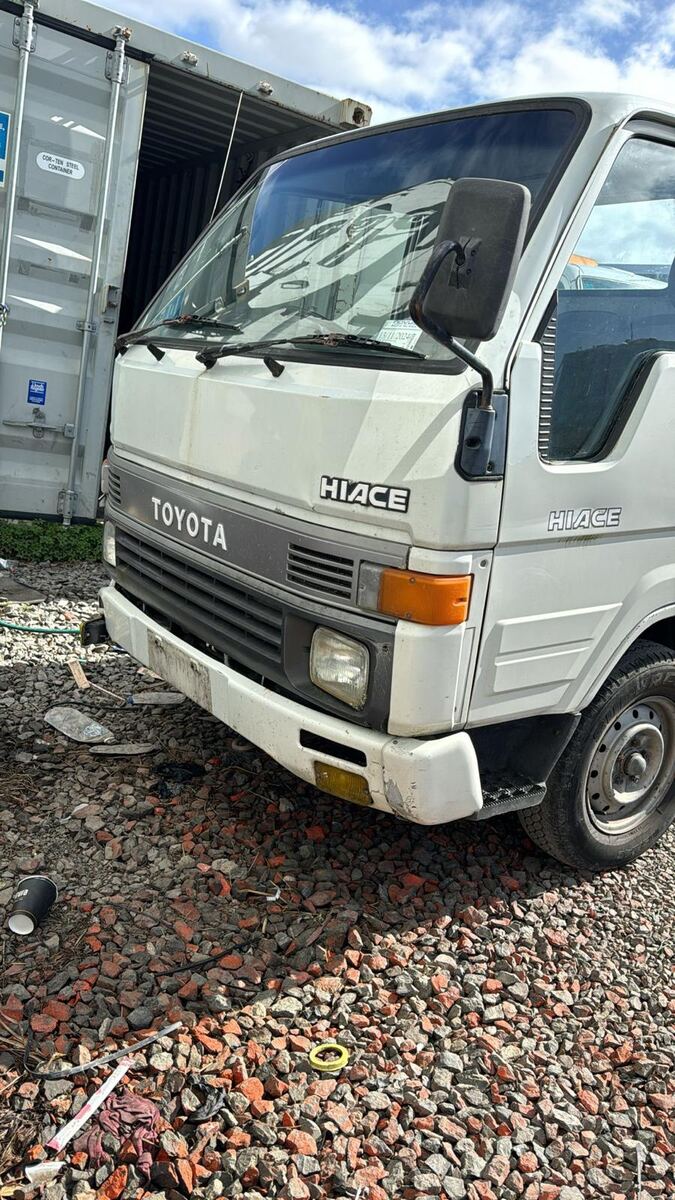
| Vans | Toyota Hiace, Nissan Caravan, Nissan Vanette | Huge ground clearance means a thief can work without jacking the van. Often parked on the street overnight. | Very high |
| Utes and 4WDs | Toyota Hilux, Nissan Navara, Mitsubishi Triton, Ford Ranger | High clearance, easy access, frequently parked at worksites and in open yards. | High |
| SUVs and people movers | Toyota RAV4, Honda CR-V, Toyota Estima, Nissan X-Trail | Higher clearance and larger converters than a typical hatchback. | Moderate to high |
| Older petrol Japanese imports | Toyota Wish, Corolla, Mazda Demio, Nissan Tiida | Low clearance makes them slower to hit, but they're everywhere, so they still get targeted. | Moderate |
| Diesels and EVs | Diesel utes (different after-treatment), Nissan Leaf, Tesla | Diesels use different exhaust parts, which are usually less valuable to thieves. Full EVs have no exhaust at all. | Lower (EVs: none) |
If you drive one of the high-risk models, the prevention steps below are worth the effort. Brand-specific notes are on our Toyota, Honda and Nissan pages, and our guide to EVs and hybrids covers what else makes hybrids valuable at the end of their life.
How to tell if your converter has been stolen
Most people find out the moment they turn the key. Look out for:
- A sudden, deafening roar on start-up that gets louder as you accelerate. This is the giveaway nine times out of ten.
- Cut pipe ends visible under the middle of the car, often with clean, shiny saw marks.
- Metal filings or small pieces of exhaust on the ground where the car was parked.
- A check-engine light shortly after starting, because the oxygen sensors have been cut or are reading raw exhaust.
- Exhaust smell inside the cabin, which is a safety issue. Don't sit in the car with the engine running.
On hybrids, the petrol engine may not start immediately, so the noise can catch you out a few minutes into a drive when the engine kicks in.
Ten ways to protect your car
No single step makes a car theft-proof. The aim is to make yours slower, noisier and riskier to hit than the one down the road. The first four cost little or nothing.
- Park in a garage if you have one, even if it means a clean-out. It's the single most effective protection there is.
- On a driveway, park nose-in and close to a wall or fence so there's less room to slide underneath. Block a high-risk van in with a lower car if you have two.
- On the street, choose well-lit spots near houses and avoid the far corners of big carparks at places like malls, train stations and park-and-rides.
- Engrave or paint your plate number on the converter. Use an engraving pen and a stripe of bright, high-temperature exhaust paint. It makes the part harder to sell and easier to trace, and the paint is a visible deterrent.
- Fit a converter shield or cage. Bolt-on steel plates or cable cages are made for the most-targeted models, especially the Prius, Aqua and Hiace. They don't make theft impossible, but they turn a two-minute job into a noisy fifteen-minute one, and most thieves move on.
- Ask a muffler shop to weld the mounting bolts or add security fasteners. It's cheap and stops a quick unbolt.
- Install a motion-sensor floodlight over the driveway. Thieves rely on darkness.
- Use a camera or video doorbell pointed at where you park. Footage helps Police and insurers, and visible cameras deter.
- Set your alarm's tilt or vibration sensor, if your car has one, so it triggers when the car is jacked or cut.
- Talk to your neighbours. Thefts cluster. One street gets hit several times in a week. A post in your local community group about a suspicious van at 3am helps everyone.
For fleet and business owners: vans and utes parked overnight in an industrial yard in Wiri, East Tāmaki or Takanini are a top target. Secure, lit, fenced parking and shields on every van usually cost less than one replacement converter. For fleet vehicles at the end of their working life, see selling a business vehicle in NZ.
What to do if it's stolen: a step-by-step plan
- Don't drive far. The car will usually run, but it's extremely loud, exhaust gases can get into the cabin, cut oxygen sensor wiring can hang near hot or moving parts, and you're likely to attract a fine for excessive noise. Drive it only a short distance at low speed to a repairer, or have it towed.
- Take photos of the cut pipes, the area underneath and anything left on the ground, before anyone touches it.
- Check for camera footage from your own and neighbours' cameras straight away, before it's overwritten.
- Report it to Police online or on 105, the Police non-emergency service. If you see it happening, call 111. Don't confront the thieves. They carry power tools and often work in pairs. Keep your file number, because your insurer will ask for it.
- Call your insurer. Comprehensive cover usually includes theft damage, subject to your excess. Third party policies typically don't.
- Get a repair quote from an exhaust or muffler specialist. Ask for both a genuine and an aftermarket price.
- Decide: fix or sell. Use the table below. If the repair is close to or more than the car's value, selling as-is is often the better financial outcome.
Replacement costs and insurance
Prices vary with the model and the parts used. These are typical South Auckland ranges as a starting point for your conversation with a repairer. They are not quotes.
| Vehicle | Aftermarket converter, fitted | Genuine (OEM) converter, fitted |
|---|---|---|
| Small petrol hatch (Demio, Tiida, Corolla) | ~$600 – $1,100 | ~$1,200 – $2,500 |
| Petrol hybrid (Aqua, Prius, Fit hybrid) | ~$900 – $1,800 | ~$2,000 – $5,000+ |
| Van or ute (Hiace, Hilux petrol) | ~$800 – $1,500 | ~$1,800 – $4,000 |
| Extra: cut oxygen sensors and pipework | ~$150 – $600 | ~$300 – $900 |
Two things often catch people out. First, if the oxygen sensors were cut, those need replacing too, which can add hundreds. Second, the car needs a working exhaust to pass a WoF, so you can't simply leave it. The exhaust has to be sealed, and emissions equipment that the vehicle was built with shouldn't be removed. If your car is already overdue for a WoF, our guide to selling without a WoF or rego may be useful.
On insurance: you'll usually pay your excess, and a claim may affect your no-claims bonus. On a hybrid with a $3,500 genuine converter, a claim makes clear sense. On a $700 aftermarket job with a $500 excess, it often doesn't. Some insurers have written off older vehicles where the repair cost was close to the car's market value. If that happens, our NZ write-off categories guide explains what it means for you.
Converter gone and the repair isn't worth it?
We buy cars with stolen catalytic converters every week, priced honestly for what's actually there. Free same-day towing anywhere in South Auckland, paid before loading, NZTA paperwork done on the spot.
📞 Call 0800 705 243 Get a Quote OnlineFix it or sell it? A simple decision table
The question is whether the repair adds more value than it costs. Here's a quick way to think about it. For a deeper version, see repair or scrap: is your car worth fixing?
| Your situation | Usually the better choice |
|---|---|
| Newer car, comprehensive insurance, otherwise in good shape | Claim and fix. The car is worth far more than the excess. |
| Mid-age car worth $5,000+, no insurance | Fix with an aftermarket converter. The repair protects most of the car's value. |
| Older car worth under ~$2,500, repair quote over ~$1,000 | Consider selling as-is. You may spend more than you'll get back. |
| Car also has other problems: no WoF, gearbox, rust, high km | Sell as-is. The converter is just the final straw. |
| Car stolen from twice, or you have nowhere secure to park | Fix and protect, or replace with a lower-risk vehicle. Repeat thefts are common. |
Selling a car with the converter missing
You can absolutely sell a car with a stolen converter, privately or to a cash buyer. Just be upfront. The converter is one of the parts a buyer counts on when pricing a car for parts or metal, so a missing one does lower the offer. A buyer finding out on the driveway is the most common reason a cash for cars quote drops on pickup day. Tell them first and the number you're quoted is the number you're paid. Our guide to getting a quote that sticks covers exactly how to describe the car.
A few points for sellers:
- Have the Police file number handy. It shows the converter was stolen, not removed and sold.
- Don't drive the car to the buyer. Any reputable car removal service should collect it free.
- Expect the rest of the car to still be worth money. The engine, gearbox, panels, wheels, battery and steel are all still there. Hybrids also have a valuable battery pack.
- File the notice of disposal at handover so you're no longer responsible for the car. See our NZTA notice of disposal walkthrough, and claim any rego refund you're owed.
One firm rule, from our side: a reputable buyer won't buy a loose catalytic converter from someone who can't show where it came from. If anyone offers you cash for "spare" converters with no vehicle attached, walk away. That market is what keeps thefts going. Our guide to verifying a cash for cars buyer covers the other warning signs.
For community groups, neighbourhood watch and fleet managers
Feel free to share or link to this guide in your neighbourhood group, school newsletter, residents' association or workplace safety notice. Here's a copy-and-paste version:
Catalytic converter theft: 5 quick tips
- Park in a garage or close to a wall, under a light.
- Engrave your plate number on the converter and paint it bright.
- Fit a shield if you drive a Prius, Aqua, Hiace or ute.
- Report suspicious activity under cars at night: 111 if it's happening, 105 afterwards.
- If yours is stolen, don't drive far. Photograph it, report it, call your insurer.
If your street or carpark has been hit repeatedly, a shared camera, better lighting or a word with the property manager makes a real difference. Thieves go where it's quick and quiet.
Frequently asked questions
Why are catalytic converters stolen?
They contain small amounts of platinum, palladium and rhodium, precious metals that are worth more than gold by weight. A converter can be cut out in minutes and is hard to trace, which makes it an attractive target.
Which cars are most at risk of catalytic converter theft in Auckland?
Petrol hybrids such as the Toyota Aqua, Prius and Honda Fit hybrid, and high-clearance vans and utes such as the Toyota Hiace, Hilux and Nissan Navara. Hybrids carry more precious metal, and tall vehicles are easy to get under.
Can I drive my car without a catalytic converter?
Only a short distance at low speed, to a repairer, if you must. It will be very loud, exhaust fumes can enter the cabin, and cut sensor wiring can be a hazard. It also won't pass a WoF until the exhaust is repaired. Towing is the safer option.
Does insurance cover a stolen catalytic converter?
Comprehensive policies usually cover theft damage, subject to your excess. Third party policies usually don't. Check your policy and report the theft to Police first, because your insurer will want the file number.
How much does it cost to replace a catalytic converter in NZ?
As a rough guide, an aftermarket converter fitted costs about $600 to $1,500, while a genuine hybrid converter can cost $2,000 to $5,000 or more. Cut oxygen sensors and pipework add to the bill. Get a written quote for both options.
Do catalytic converter shields work?
They don't make theft impossible, but they make it much slower and noisier, and most thieves move on to an easier car. They're well worth considering for the most-targeted models.
Can I sell my car if the catalytic converter has been stolen?
Yes. Tell the buyer up front so the quote reflects the car as it is. Cash For Cars South Auckland buys cars with missing converters across South Auckland, with free towing and payment before loading. Call 0800 705 243 for a quote.
Converter gone and the numbers don't add up? Get a firm price from Cash For Cars South Auckland, or read our 2026 price guide first. We collect from every suburb, from Māngere and Manurewa to Papakura and Pukekohe. Find yours on the suburbs page, and check our customer reviews and trust credentials.
Cost ranges in this guide are approximate, based on typical South Auckland repairs, and are not quotes. Precious metal prices, insurance policies and repair costs change. This is general guidance, not legal or insurance advice. If a crime is in progress, call 111.
Related Guides
Scrap Metal Prices in Auckland 2026: What Each Metal in Your Car Is Actually Worth
Read GuideRepair or Scrap? How to Work Out If Your Car Is Actually Worth Fixing
Read GuideThe Quote That Sticks: How to Get an Accurate Cash For Cars Offer in South Auckland (2026)
Read GuideConverter Stolen? We'll Still Pay Cash
Honest quotes for cars with missing converters, free same-day collection anywhere in South Auckland, paid before loading and NZTA paperwork done on the spot. Running or not, any make.