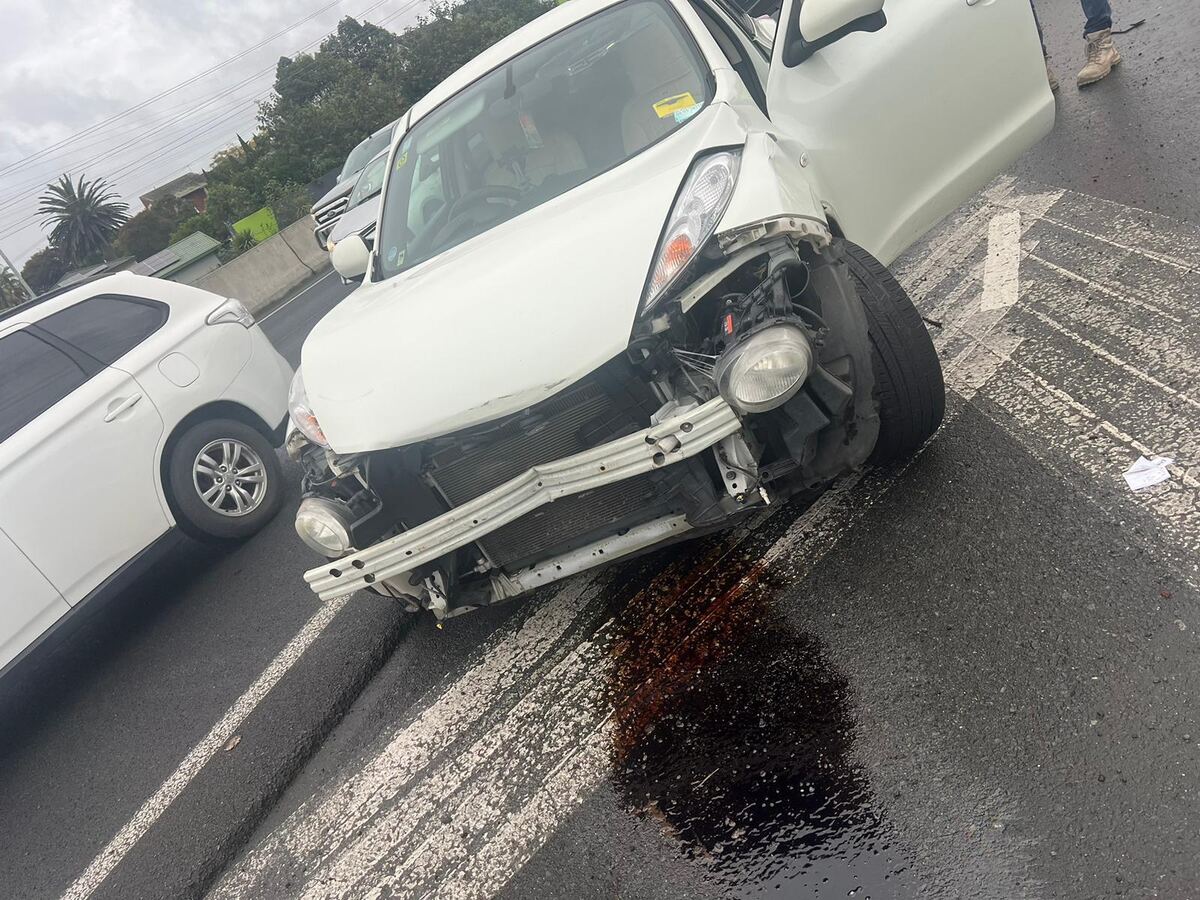
Quick answer: If your car fails its WoF, you have 28 days to fix the listed faults and get a free recheck at the same inspecting organisation. Fix cheap safety items such as tyres, brakes and bulbs. If the failure is structural rust, a failed engine or a failed transmission, compare the repair quote with an as-is cash offer before spending anything.
The inspector hands you a sheet with three ticks in the "fail" column, and suddenly you have a decision to make that you didn't plan for. In our South Auckland yard, a failed WoF is the single most common reason a car ends up on our truck. A fair number of those cars should have been fixed instead. The most common mistake we see is deciding before pricing the actual items on the sheet. People either pour money into a car that was finished, or sell a car that only needed $400 of tyres.
This guide covers what to do in the first 28 days after a failed WoF, what the new WoF rules from 1 November 2026 change and what they don't, a fault-by-fault triage table with guide repair costs, a worked example with numbers, and the legal rules for selling a car that hasn't passed.
Your Car Failed Its WoF: The First 28 Days
The failure sheet starts a clock, and most of the money you can lose here comes from missing it.
- Keep the failure sheet. It lists every reason for rejection. Each line is a separate item you can get a quote for, so treat it as a shopping list.
- Note the date. NZTA's inspection rules give you 28 days for a free recheck. A car failed on 1 March must be rechecked before the end of 29 March.
- Get quotes anywhere. The repair does not have to be done by the station that inspected the car. NZTA has told inspectors they cannot charge for a recheck within 28 days even when the repairs were done somewhere else.
- Go back to the same organisation. The free recheck only applies at the same inspecting organisation. It doesn't have to be the same branch, but go to a different company and you start again with a fresh, paid inspection.
- Drive it only to the repairer or the recheck. NZTA is explicit that the 28 days are not permission to keep using the car. You can drive it to be fixed or re-inspected if it is safe to do so. Nothing else.
Key takeaway: after day 28 the free recheck is gone and the car needs a full new inspection, which you pay for. If you are still deciding at day 20, you've effectively made the decision already, because nothing has been booked.
"My old WoF hasn't expired yet. Can I keep driving?"
This is the question we hear most. Many people get their WoF checked a few weeks early and fail while the old label is still current. The label isn't torn up, but NZTA's guidance is that a defect found at inspection has to be fixed before the car is used for other purposes, even if the old WoF hasn't expired. You now know about the fault, and so does the inspection record. Driving it anyway can mean a ticket, and after a crash it gives your insurer an easy reason to decline the claim.
The New WoF Rules From 1 November 2026
The Vehicle Standards Compliance rule changes took effect ten days before this guide was published, and a lot of what's online is now out of date. Here is what changed for light vehicles, based on NZTA and AA summaries:
| Vehicle | Before 1 Nov 2026 | From 1 Nov 2026 |
|---|---|---|
| Brand-new light vehicle | Second WoF at 3 years | Second WoF at 4 years |
| First registered on or after 1 Nov 2019 (4–14 years old) | Annual | Every 2 years |
| First registered 1 Nov 2013 – 31 Oct 2019 | Annual | Annual until 1 Nov 2027, then every 2 years |
| Over 14 years old | Annual | Annual |
| First registered before 1 Jan 2000 | Every 6 months | Annual |
| Fine: WoF expired more than 2 months | $200 | $350 |
WoF inspections now also include a basic check of advanced driver assistance systems (ADAS), such as automatic emergency braking and lane keep assist, where they're fitted. In practice the inspector looks for system warning lights rather than testing whether the systems work.
What the new rules mean if you've just failed
- Nothing changes about the failure itself. The pass standard, the 28-day recheck and the "drive only to the repairer" rule all still apply.
- The date on your current label still stands. The new frequency applies from your next inspection onward.
- Longer gaps raise the stakes. On a two-yearly car, worn tyres or brakes can go a long time without anyone looking at them. You are responsible for keeping the car warrantable between inspections, not just on inspection day.
- Older cars are now cheaper to keep. If you were going to scrap a pre-2000 car partly because of the six-monthly WoF, that cost has halved. Run the numbers again.
- ADAS faults are a new kind of failure. On late-model cars, a dashboard warning caused by a cracked windscreen camera or a damaged radar sensor behind a bumper can now be expensive, especially after a minor crash.
Fix or Sell? Fault-by-Fault Triage
The failure sheet tells you what's wrong, not what it's worth doing. This is the triage we run in our heads when someone reads their sheet to us over the phone. The costs are guide ranges for ordinary passenger cars at independent South Auckland workshops, including parts and labour. They depend heavily on make, model, year and parts availability, and European cars, utes and hybrids usually sit at or above the top. Always get a written quote.
| Failure item | Guide repair range | Usual verdict on a car worth under $5,000 |
|---|---|---|
| Bulbs, wipers, number-plate light, horn | $20–$150 | Fix. These are the cheapest WoF items to put right. |
| Tyres (two to four) | $300–$1,100 | Fix. A safety item, and buyers will ask about it anyway. |
| Brake pads and discs (per axle) | $350–$900 | Fix. Safety-critical. |
| Windscreen crack in the driver's view | Often covered by insurance glass cover, otherwise several hundred dollars. More on cars with ADAS cameras. | Fix. Check your policy first. |
| Ball joints, tie-rod ends, bushes | $300–$1,200 | Usually fix |
| Oil leaks, CV boots, exhaust leak | $150–$900 | Usually fix, unless the leak points to a bigger engine fault |
| Shock absorbers (pair) | $600–$1,600 | Borderline. Fix only if the rest of the car is sound. |
| SRS / airbag warning light | $500–$3,500 | Get it diagnosed first. Can be a cheap sensor or an expensive module. |
| Rust in or near structure (sills, chassis rails, seatbelt or suspension mounts) | $1,200–$6,000+, hard to predict until cut out | Usually sell. Structural repairs can also need specialist certification. |
These ranges match the repair costs in our repair or scrap break-even guide, which also covers faults a WoF won't catch, such as head gaskets and automatic transmissions.
The two questions that settle borderline cases
1. Is this the first item in a queue? Ask the inspector or mechanic: "If this were your car, what else would you expect to spend in the next 12 months?" A car that fails on rust and bushes and an oil leak is telling you how the next year will go.
2. Does the repair add more value than it costs? Compare: repair cost against (value with a fresh WoF − cash offer as it sits today). If the repair costs more than the gap, you're paying to get poorer.
Worked Example: Two Cars, Same Failure Sheet
Here is a scenario we see constantly. Two cars fail on the same day for the same three items: two front tyres, a split CV boot and rust in a sill near a seatbelt mount. The figures below are guide ranges for illustration, not quotes.
| Car A: 2012 Toyota Corolla | Car B: 2005 Nissan Tiida | |
|---|---|---|
| Tyres + CV boot | $450–$700 | $450–$700 |
| Sill rust repair | $800–$1,500 (localised) | $1,500–$3,000 (found spreading once opened) |
| Total to pass | $1,250–$2,200 | $1,950–$3,700 |
| Value with fresh WoF (private sale) | $7,000–$9,000 | $2,000–$3,000 |
| As-is cash offer today | $2,500–$4,000 | $300–$700 |
| Value gap the repair unlocks | Roughly $4,500–$5,000 | Roughly $1,700–$2,300 |
| Verdict | Fix it | Sell it as it is |
Same sheet, opposite answers. For the Corolla, spending about $2,000 unlocks more than twice that. For the Tiida, the repair can cost more than the whole gap, and you'd be giving up a guaranteed cash offer to find out. Notice it's the rust line, not the tyres, that decides it. That's almost always the case. Rust is the item we see end more South Auckland cars at WoF time than any other, especially older Japanese imports that sat near the coast.
Selling a Car That Failed Its WoF: What NZ Law Says
Selling a car without a current WoF is completely legal. Most of the confusion is about who carries the risk.
Selling privately
- The buyer can't drive it home except directly to a repairer or inspection, and only if it's safe. Expect to arrange a tow or trailer.
- Disclose the failure. The Consumer Guarantees Act does not cover private sales, but a private seller who misleads a buyer can still face a claim under contract law, for example in the Disputes Tribunal. Showing buyers the failure sheet protects you.
- Expect a discount. Private buyers mark a car down heavily when it has no current WoF, often by more than the repairs would cost, because they're pricing in the unknown.
Selling or trading in to a business
- Dealers, wreckers and cash-for-cars buyers are in trade, so the Fair Trading Act applies to what they tell you. They can't mislead you about why they're offering less.
- A wrecker values the car on parts, metal and resale potential, so a failed WoF on its own rarely moves the offer much. The underlying fault does. A cracked windscreen barely matters, while a dead engine does.
- Whoever buys it, file the notice of disposal the same day so fines and tolls stop coming to you. Our NZTA notice of disposal walkthrough explains how.
Rego is a separate question
A failed WoF doesn't cancel your registration or vehicle licence ("rego"). They're separate requirements. If the car is going to sit off the road while you decide, or you sell it to a wrecker, you may be able to get back unused licence fees. Our guide to claiming a rego and RUC refund explains the process. For the rules on unwarranted and unregistered cars more generally, see selling a car without WoF or rego.
Three Failed-WoF Traps to Avoid
- Letting the 28 days lapse. The free recheck disappears and you pay for a full new inspection. Set a phone reminder for day 21.
- Accepting a "while we're in there" list without a breakdown. Ask for the WoF-required items to be quoted separately from recommendations. Only the first list is needed to pass.
- Selling to someone who won't file the paperwork. Any buyer who suggests skipping the change of ownership is a red flag, whether they're private or a "wrecker" with no address. Check them using our guide to verifying a cash-for-cars buyer.
Frequently Asked Questions
Can I drive my car after it fails a WoF?
Only to get it repaired or re-inspected, and only if it is safe to do so. NZTA says the 28-day recheck period relates to inspection fees, not a grace period for normal driving. Even if the old WoF label has not expired, the defect has to be fixed before you use the car for everyday trips. Driving it anyway risks an infringement and can give your insurer grounds to decline a claim.
How long do I have to fix a failed WoF in NZ?
You have 28 days from the failed inspection to get a free recheck, as long as you go back to the same inspecting organisation. It does not have to be the same branch, and the repairs can be done at any workshop. After 28 days the recheck is no longer free and the car needs a full new WoF inspection, so book the repair as soon as you have the failure sheet.
Did the WoF rules change in November 2026?
Yes. From 1 November 2026, new light vehicles need their second WoF after four years instead of three. Vehicles first registered on or after 1 November 2019 move to two-yearly WoFs, and those registered from 1 November 2013 follow on 1 November 2027. Vehicles first registered before 1 January 2000 move from six-monthly to annual inspections. The date already on your windscreen label still stands.
What is the fine for driving without a current WoF?
From 1 November 2026, the infringement fee for driving a vehicle whose WoF expired more than two months ago went up from $200 to $350, according to the AA's summary of the rule changes. Separate penalties can apply for specific unsafe defects, such as non-compliant tyres, and police can order an unsafe vehicle off the road even if it has a current WoF.
Can I sell a car that has failed its WoF?
Yes. Selling a car without a current WoF is legal, but the buyer cannot drive it away except to a repair or inspection, so it usually has to be towed. Tell buyers about the failure. A private seller who misrepresents a car can face a claim under contract law. Traders also have obligations under the Fair Trading Act and, when selling, the Consumer Guarantees Act.
Is a failed WoF worth fixing before I sell?
Only if the repair adds more to the sale price than it costs. Cheap consumables such as tyres, bulbs, wipers and brake pads usually pay for themselves on a private sale. Structural rust, a slipping automatic transmission or a head gasket on an older car usually do not. Price the specific items on your failure sheet, then compare the repaired value with an as-is cash offer.
Do wreckers pay less for a car that failed its WoF?
Usually not much less, because a wrecker or cash-for-cars buyer is valuing the car's parts, metal and export or resale potential, not its roadworthiness. What lowers an offer is the fault itself. A failed engine or heavy rust removes value whether or not there is a current WoF. A failure for a cracked windscreen or worn tyres often makes little difference to a wrecking offer.
The Verdict
Treat a failed WoF as a price list, not a verdict. Fix consumables and safety items on any car you're keeping. Run the break-even test on anything over about $1,000. If the sheet says structural rust on an older, low-value car, stop spending and get an as-is offer before the 28 days run out. Under the new rules, a car that passes now may not see an inspector again for up to two years, so make sure the repair is worth it.
If the numbers point to selling, Cash For Cars South Auckland buys failed-WoF cars as they sit, from Ōtara and Manurewa to Papakura, and we tow them away, so the "can't drive it" problem doesn't come up. Read the failure sheet out to us on 0800 705 243 or use the quote form, and we'll tell you honestly whether we think it's worth fixing instead. More on our cash for cars service and scrap car removal.
Sources
- NZTA, Warrant of fitness: 28-day recheck and driving after a failed WoF.
- NZTA Vehicle Inspection Requirements Manual, Rechecks, and Charging for re-checks within 28 days of a failed inspection.
- NZTA, Changes to light vehicle inspections from 1 November 2026.
- AA, WoF rule changes: what you need to know: frequencies, transition dates, $200 to $350 fine, ADAS checks.
- New Zealand Legislation, Consumer Guarantees Act 1993 and Fair Trading Act 1986.